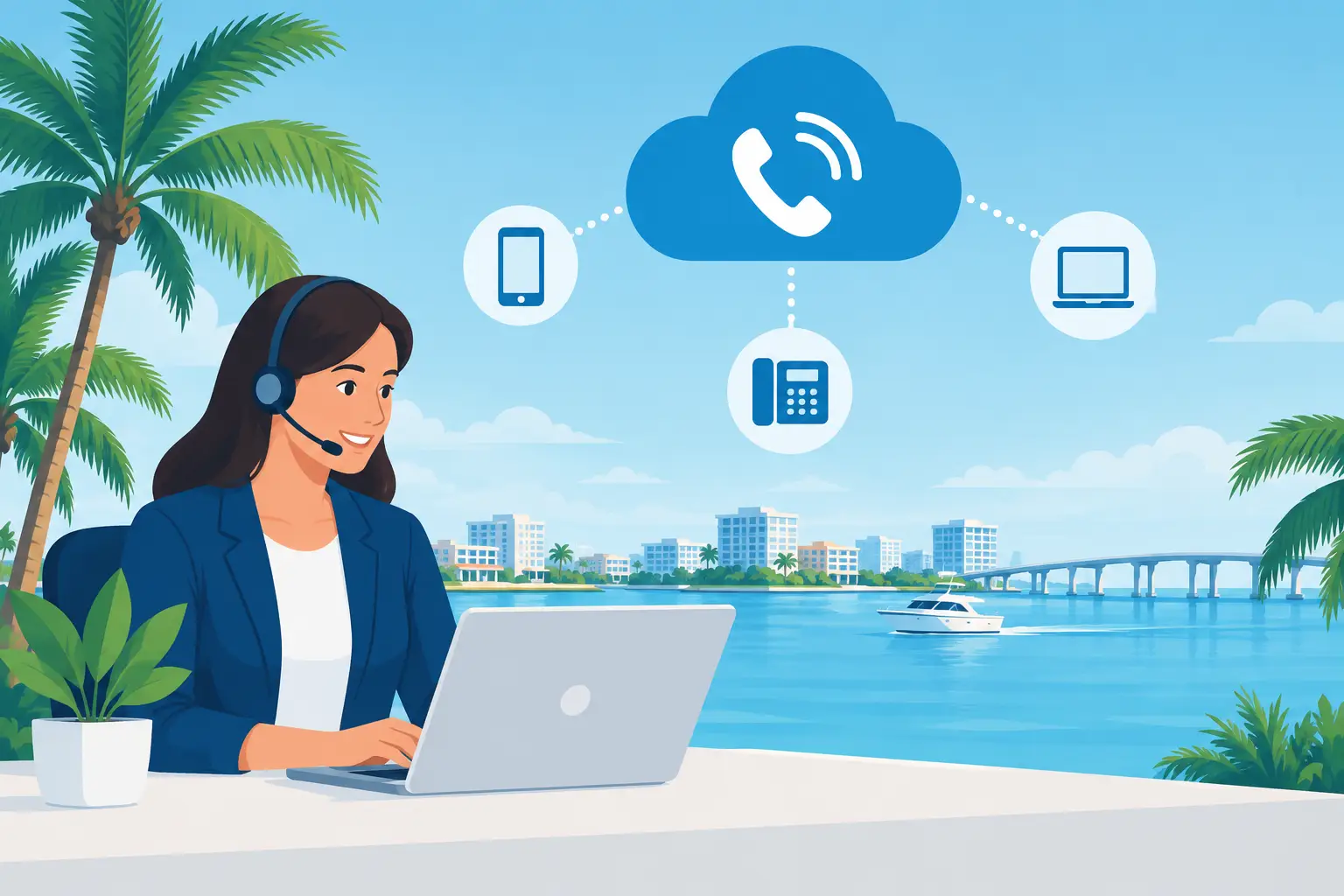
A missed call to a Naples medical office, a Fort Myers construction company, or a Bonita Springs real estate team can quickly become a missed appointment, delayed approval, or lost opportunity. Cloud telephony helps prevent that by moving business calling from an aging phone cabinet in the office to a professionally managed service that can follow your team, support your operations, and keep communications available when conditions change.
For small and midsize businesses, the appeal is not simply newer phones. It is having a phone system that works consistently across office desks, mobile devices, home offices, and temporary locations without requiring someone internally to become the phone-system expert. When calling is managed as part of a broader IT strategy, it also becomes easier to support, secure, and budget.
What Cloud Telephony Means for Your Business
Cloud telephony is a business phone service delivered over an internet connection rather than traditional phone lines or an on-premises PBX. Calls are processed through a provider's cloud platform. Employees can use desk phones, computer applications, mobile apps, or a combination of all three while keeping the same business number and professional call handling.
That distinction matters because a phone number is no longer tied to a particular desk or physical office. A receptionist can answer a main line from another location. A project manager can receive work calls on a mobile device without sharing a personal number. An office manager can change call routing without waiting for a carrier technician to visit.
The system can still feel familiar to employees. They have extensions, voicemail, call transfers, holds, conference calls, and direct dialing. The difference is that those functions are controlled through software and a managed service instead of hardware that may be expensive to repair, difficult to expand, and dependent on one location.
Why Local Businesses Are Replacing Traditional Phone Systems
Traditional phone systems can work for years, but they often become a business risk when changes are needed. Adding a new employee may require more licenses, wiring, programming, or equipment. Remote work can mean forwarding calls to personal phones. If the office loses power or internet access, the main number may have no practical backup plan.
Cloud-based calling gives organizations more options. Calls can be redirected to another employee, another site, or an approved mobile device. New users and extensions can generally be added without redesigning the entire system. Teams can see presence information, use shared voicemail, and route calls based on business hours, department, or caller need.
For Southwest Florida businesses, continuity is especially relevant. Severe weather, building access issues, local outages, and changing work arrangements can disrupt an office with little notice. A cloud phone system does not eliminate the need for planning, reliable internet, or backup power. It does give the business a better way to keep its primary number and call flow active when staff cannot work from their usual desks.
The Operational Benefits That Matter Most
The right phone system should improve how work moves through the business. It should not create another vendor relationship, another portal nobody understands, or another issue employees are expected to troubleshoot on their own.
A well-designed cloud telephony service can give a professional services firm a clear call path from receptionist to department to individual. It can give a construction company a dependable way to reach field leaders. It can help a hospitality operation manage seasonal staffing and busy call periods. For healthcare-adjacent offices, it can support organized call handling while the organization maintains appropriate privacy and security practices.
The practical benefits usually come down to four areas:
- Business continuity: Calls can be rerouted during an office disruption, allowing staff to stay reachable from approved locations.
- Flexibility: Employees can take and place business calls from the devices that fit their role while preserving a consistent company identity.
- Scalability: Adding users, moving extensions, or adjusting call flows is simpler as staffing and business needs change.
- Visibility and control: Authorized administrators can review call settings, establish business hours, manage voicemail, and make changes without depending on outdated equipment.
These advantages are meaningful only when the system is configured around the way your company actually works. A generic automated attendant may sound polished, but it can frustrate callers if it sends them through unnecessary menus. Likewise, giving every employee every calling feature can add cost and confusion without improving service.
Cloud Telephony Depends on Network Readiness
Cloud calling is not separate from your IT environment. Voice quality depends on a stable internet connection, properly configured network equipment, Wi-Fi coverage where wireless phones are used, and enough capacity to handle calls alongside normal business traffic.
This is where a low-price phone offer can become expensive. A provider may supply licenses and phones but leave your company responsible for diagnosing poor call quality, dropped calls, router conflicts, or firewall settings. When several vendors are involved, an office manager can end up caught between the internet provider, phone provider, and IT company while the issue continues.
Before moving to cloud telephony, assess the full environment. Review internet reliability, bandwidth, cabling, switch capacity, wireless coverage, existing phone numbers, and the number of simultaneous calls the business expects during busy periods. Your team should also decide which roles need desk phones, which can use mobile or computer applications, and which calls require special routing.
Internet redundancy may be appropriate for organizations where calls are essential to revenue, safety, scheduling, or customer service. For some businesses, a backup cellular connection and planned call forwarding are sufficient. For others, multiple internet paths, battery backup, and a documented communications plan are worth the added investment. The right choice depends on the cost of being unreachable.
Security Should Be Part of the Phone Conversation
Business phone systems hold more information than many leaders realize. They may contain call logs, voicemail messages, employee extensions, contact details, and settings that can redirect calls. If attackers gain access to an administrator account, they may attempt toll fraud, intercept communications, or reroute calls to disrupt operations.
Security controls should include strong unique passwords, multifactor authentication where available, carefully limited administrator access, and prompt removal of former employees. Voicemail settings deserve attention as well. A voicemail box with a weak PIN can expose messages or give an attacker a path to misuse the system.
Cloud telephony also needs to fit into the company's broader cybersecurity practices. Employees should know how to identify suspicious calls, protect customer information, and verify unusual payment or banking requests through a known contact method. A new phone platform cannot solve social engineering on its own, but a managed IT partner can help make voice communications part of a practical security program.
Planning a Move Without Disrupting Calls
A successful transition begins with the current call flow, not a phone catalog. Document main numbers, direct lines, extensions, departments, voicemail boxes, after-hours rules, fax requirements if any remain, alarm or elevator lines, and third-party systems that use phone numbers. Those details are where avoidable disruption often occurs.
Number porting deserves particular care. Businesses generally want to keep established numbers, but moving them between carriers requires accurate account information and coordination. Do not cancel existing service before the port is complete. A planned cutover should include testing, employee instructions, and a clear point of contact for questions on launch day.
Training should be brief and role-specific. Reception staff need confidence with call transfer, parking, paging, and directory functions. Field personnel may need only the mobile app and a clear rule for business caller ID. Managers may need access to reports or call-routing controls. Training becomes more effective when it reflects these daily tasks instead of covering every feature available in the platform.
Choosing a Provider That Will Be There When It Matters
Phone service is easy to purchase and harder to support well. When evaluating options, look beyond the monthly per-user price. Ask who will configure call flows, coordinate number porting, assess network readiness, install devices, train employees, and respond when a problem affects customer calls.
For businesses in Bonita Springs, Naples, Fort Myers, and surrounding Southwest Florida communities, local accountability can make a real difference. An on-site resource is valuable when a network closet, front desk phone, wiring issue, or office move needs attention. Remote management remains essential, but it works best alongside a provider that understands the local business and can take ownership when problems cross vendor boundaries.
Prisca Nova approaches business phone systems as part of managed technology, not as an isolated utility. That means cloud calling can be supported alongside network management, cybersecurity, Microsoft 365 administration, and day-to-day IT needs. Flat-rate service helps make costs more predictable, while a one-hour response commitment gives business leaders a clear expectation when technology needs attention.
The best phone system is the one your customers never have to think about. They call a familiar number, reach the right person, and receive a timely answer, even when your team is working somewhere other than the office.